
How Much Does a Builder Cost in Hastings? | Local Builder’s Guide
Knowing what building work costs before you start the conversation with a builder makes the entire process less daunting. Too many homeowners across Hastings put off projects they genuinely need because the cost feels like a mystery — and the fear of an unknown number is often worse than the number itself. A cracked garden wall stays cracked. A kitchen that stopped working properly five years ago gets another temporary fix. A bathroom that needs replacing gets resealed for the sixth time. The patio that has sunk and pooled water since the last heavy rain gets walked around rather than walked on.
This guide sets out realistic costs for the most common domestic building projects across Hastings, explains what affects the price, and helps you approach the conversation with a builder knowing roughly what to expect before the quote arrives.
Extension Costs
Extensions represent the largest domestic building investment most homeowners make, and the cost range reflects the variety of what can be built.
A single storey rear extension in Hastings typically costs between £20,000 and £50,000 depending on size and specification. A modest three metre extension on a standard terraced house or semi with basic finishing sits at the lower end. A larger extension of five to six metres with bi-fold doors, a roof lantern, underfloor heating, and a fully fitted kitchen reaches the upper end. The terraced housing through the Old Town, along the seafront, and across the established streets suits rear extensions well where garden depth allows.
A double storey extension typically costs between £32,000 and £62,000. Building two storeys shares foundations, walls, and roof across both levels, delivering significantly more space per pound than two separate single storey projects. The ground floor provides additional living space while the first floor adds bedrooms or bathrooms above.
A side return extension — extending into the narrow passage alongside a terraced or semi-detached property — typically costs between £14,000 and £26,000. Combined with a rear extension as a wrap-around, costs reach between £28,000 and £50,000.
Hastings’ hillside properties present specific extension challenges. Properties built on the steep terrain through the Old Town, along the Ridge, and across the hills above the seafront may need additional groundwork, retaining structures, or specialist foundation design that adds to the cost compared to building on flat ground. Your builder should assess the site conditions during the initial visit and account for them in the quote.
Loft Conversion Costs
A Velux conversion — the simplest type where the existing roof stays unchanged — typically costs between £18,000 and £32,000. It suits lofts with adequate headroom and properties where external roof alterations are restricted, which is particularly relevant across Hastings’ Old Town and seafront conservation areas.
A rear dormer conversion — extending the roof outward to create vertical walls and consistent headroom — typically costs between £26,000 and £48,000. Most three bedroom terraces and semis converting with a dormer and ensuite fall between £30,000 and £44,000.
A hip-to-gable conversion combined with a rear dormer — the configuration that creates the most spacious room — typically costs between £36,000 and £55,000. This suits the semi-detached housing across the established estates where hipped roofs are common.
Hastings’ conservation areas — particularly across the Old Town, the seafront, and parts of St Leonards — impose restrictions on dormers visible from public highways. A Velux conversion faces fewer constraints and is often the appropriate choice where planning sensitivity applies.
Kitchen and Bathroom Costs
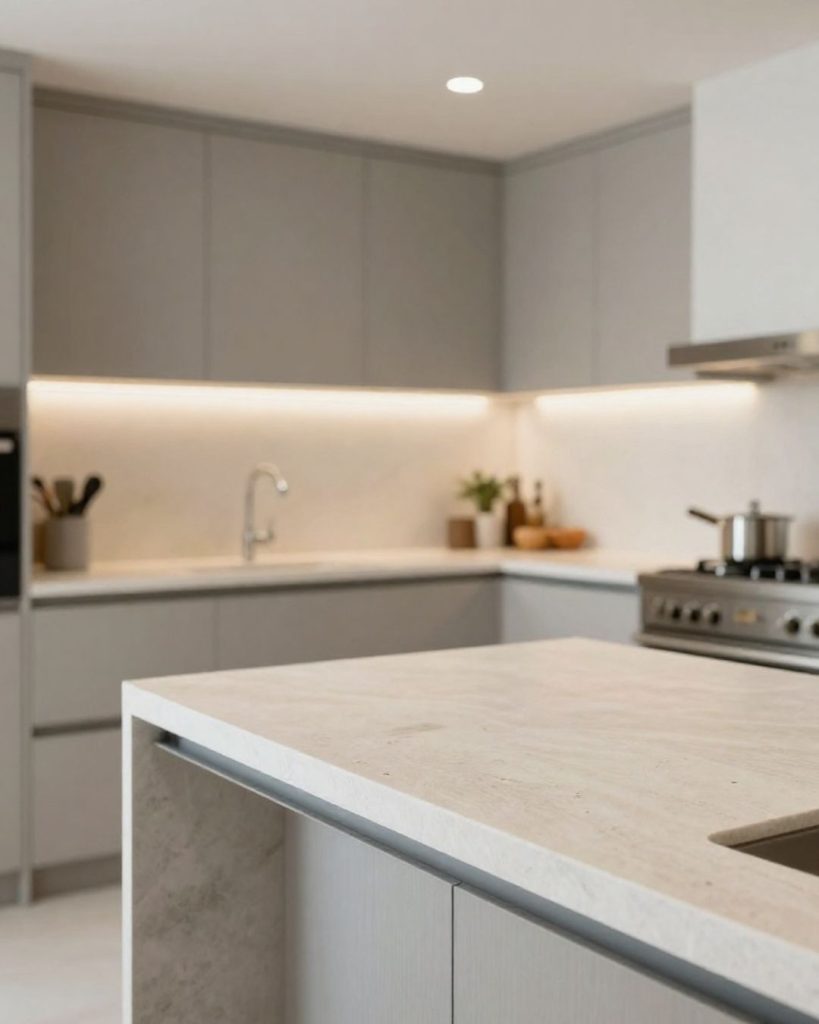
Kitchen replacements in the existing layout typically cost between £6,000 and £12,000 for new units, worktops, tiling, flooring, and decoration without structural changes. A mid-range renovation with layout changes, replumbing, new electrics, and quality finishing costs between £12,000 and £25,000. A major project with structural wall removal for open-plan living, premium units, and stone worktops reaches £25,000 to £45,000.
Bathroom suite replacements — new sanitaryware in existing positions with retiling and decoration — typically cost between £3,500 and £7,000. A full renovation with layout changes, floor-to-ceiling tiling, and quality fittings costs between £7,000 and £15,000. A premium installation with a wet room conversion, designer fittings, and underfloor heating reaches £15,000 to £25,000.
The quality of plumbing and waterproofing behind the tiles matters more than the visible fixtures in both rooms. Investing in these hidden elements determines whether the kitchen or bathroom performs reliably for a decade or develops problems within a couple of years.
Garage Conversion Costs
A standard integral garage conversion — closing the front opening, insulating throughout, installing electrics, heating, plastering, flooring, and decoration — typically costs between £7,500 and £14,000. An attached garage costs between £9,000 and £17,000 because more insulation is needed.
Adding an ensuite within the conversion footprint pushes costs to between £14,000 and £22,000. A self-contained annexe with kitchenette and bathroom reaches £17,000 to £27,000 and may require planning permission.
Garage conversions deliver the best value per square metre of any building project because the structure already exists. Most complete within three to four weeks.
General Building Costs
The everyday building work that does not fit into major project categories carries its own cost ranges.
A new garden wall in brick or block typically costs between £120 and £200 per linear metre depending on height and foundation requirements. A ten metre boundary wall at one metre height costs roughly £1,500 to £2,500.
Repointing typically costs between £25 and £45 per square metre. Repointing the front elevation of a standard Hastings terrace costs roughly £800 to £1,500. Hastings’ seafront and hillside properties are exposed to coastal weather that accelerates mortar deterioration — repointing is needed more frequently than on sheltered inland properties.
A new patio costs between £60 and £150 per square metre depending on material — concrete slabs at the lower end, natural stone or porcelain at the upper end. A fifteen square metre patio costs roughly £900 to £2,250.
Rendering costs between £35 and £60 per square metre for traditional render or £50 to £80 for silicone or monocouche render. The front elevation of a terraced house costs roughly £1,500 to £3,000.
Structural wall removal with a steel beam — creating open-plan living by knocking through between kitchen and dining room — typically costs between £2,800 and £5,500 for a standard opening including engineering, steelwork, building control, and making good.
Chimney repairs — repointing a stack costs £300 to £600. Lead flashing replacement costs £250 to £500. A full stack rebuild costs £1,500 to £3,500. Hastings’ exposed position means chimneys deteriorate faster than in sheltered locations and need attention before water finds a path into the property below.
What Affects Building Costs in Hastings?
Property location and access have a significant impact. The steep hillside streets through the Old Town, along the Ridge, and across the hills above the seafront present access challenges for material delivery, skip placement, and scaffolding that flat sites do not. Properties on narrow lanes without direct vehicle access add time and labour for carrying materials by hand. These logistical factors are built into the quote rather than discovered as extras during the build.
Property age and construction influence costs across every project type. Hastings’ older housing — the Victorian and Edwardian terraces through the town centre and Old Town, the Regency properties across parts of St Leonards — has solid walls, traditional plaster, and structural arrangements that take longer to work with than modern cavity wall construction. Period properties cost more per square metre to extend, convert, and renovate because the construction demands more careful handling.
Conservation area restrictions affect what can be built and how it needs to look. The Old Town, parts of the seafront, and sections of St Leonards sit within conservation areas where extensions, dormers, and external alterations face additional design requirements and planning scrutiny. Conservation-grade materials and sympathetic design may add to the overall budget.
Coastal exposure affects material specifications and maintenance cycles. Salt air, driving rain, and stronger winds mean external building elements — brickwork, mortar, render, roofing, and timber — deteriorate faster than on inland properties. Specifying materials appropriate for coastal exposure costs slightly more initially but lasts significantly longer and reduces future maintenance costs.
Specification choices are the factor you control most directly. The gap between basic and premium specification on any project type is substantial. A kitchen renovation ranges from £6,000 to £45,000. A bathroom from £3,500 to £25,000. Being clear about your priorities and budget before requesting quotes ensures every builder prices the same standard and the comparison is meaningful.
Getting the Best Value
Get itemised quotes from two or three experienced local builders. Ensure each covers the same scope, specification, and finishing standard. A quote that bundles everything into one lump sum makes comparison impossible — you cannot tell what each element costs or where one builder is pricing differently from another.
Invest in the elements you cannot see. Foundations, steelwork, waterproofing, plumbing connections, and electrical installations sit behind the visible surfaces for decades. Cutting costs on these hidden elements saves money on paper but creates problems that cost more to fix than they saved.
Discuss Hastings-specific factors upfront. If your property is on a steep hillside, in a conservation area, or exposed to coastal weather, raise these during the initial conversation so the builder accounts for them in the quote rather than discovering them as extras during the work.
Build in contingency. Older Hastings properties regularly produce surprises behind walls and beneath floors — corroded pipework, structural movement, damp that was not visible before surfaces came off. A contingency of ten to fifteen percent prevents an unexpected discovery from derailing your budget or forcing compromises on the finishing quality.
If you are planning building work at your Hastings property, get in touch for a free consultation. We will visit, assess the project, discuss the specific factors affecting your property, and provide a detailed, itemised quote so you know exactly what the work involves and what it costs before committing.